Meet us at High End Vienna — June 4–7, 2026 →
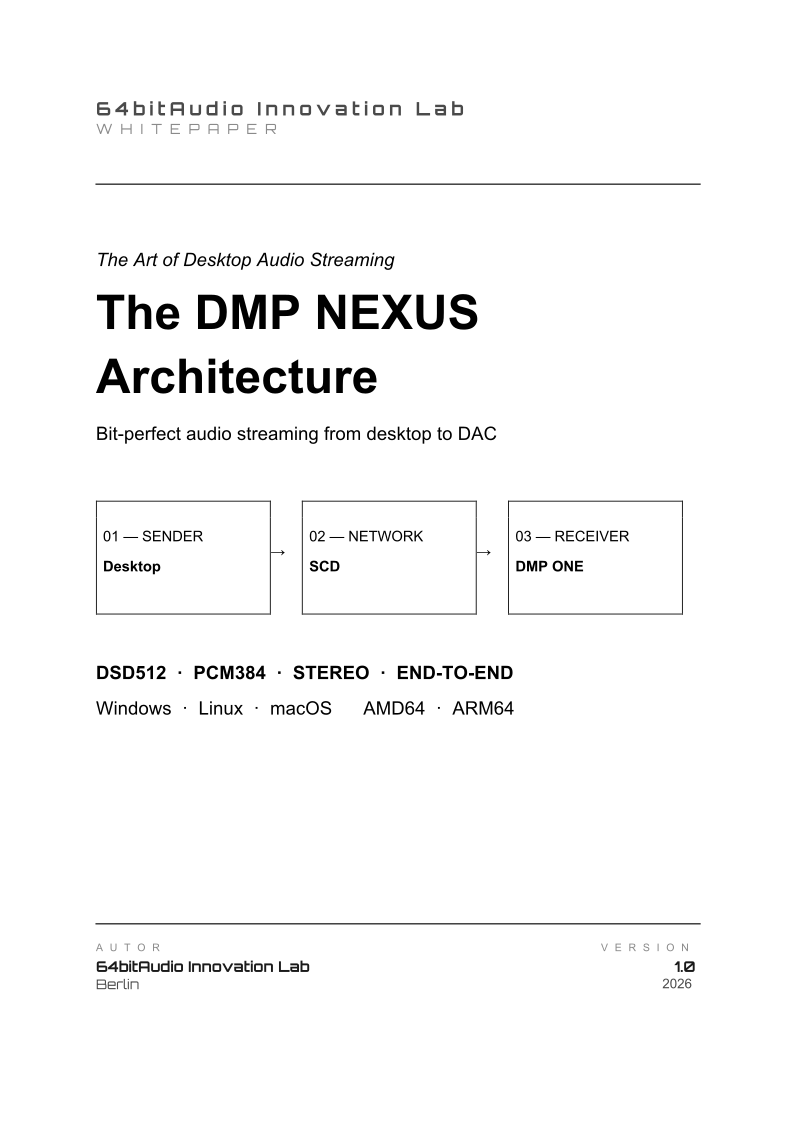
White paper cover — The DMP NEXUS Architecture

TECHNICAL WHITE PAPER · DMP NEXUS

The art of desktop audio streaming.

Managing the stream from end to end.

The complete technical reference for the DMP NEXUS ecosystem: the desktop sender architecture, the SCD network protocol, and the receiver. How audio travels bit-perfect from any application to your DAC — documented, not just claimed. Written for people who verify before they buy.


See our Privacy policy →

WHITE-PAPER LANGUAGE

TABLE OF CONTENTS

What's inside.

The white paper is a complete technical reference, structured around the three segments of the architecture. Below is the chapter breakdown.

01

The starting point: the desktop as audio source

Using a Windows, Linux, or macOS desktop as a primary audio source in high-end audio setups is still associated with numerous compromises and challenges.

02

Design principles of the DMP NEXUS ecosystem

The convictions behind the architecture: no manipulation of the data, verifiable bit-perfect transfer, standards conformance, minimal configuration, and ARM64/AMD64 support.

03

The sender architecture

The desktop side in full: Windows integration (ASIO and WAVERT), the Linux PipeWire sink, the DMP NEXUS CORE as orchestrator and sender, and the DMP NEXUS PLAYER as reference player.

04

The network: the Songcast Direct (SCD) protocol

How sender and receiver communicate: an OpenHome-based, lossless TCP protocol carrying up to DSD512 and PCM384 across your network.

05

The receiver

The DMP ONE in detail: dual-DAC plug-and-play with adaptive DSD configuration, a hardened Debian 12 base with over-the-air updates, and the local music server with UPnP integration.

06

Summary and outlook

Where the architecture stands today, and where it's heading.

The paper closes with acknowledgements to the open-source community and full references. Diagrams, tables, and references included.

WHO THIS IS FOR

Written for people who verify.

AUDIOPHILES

You evaluate before you buy.

If you compare specifications, audition critically, and want to know how the system actually works — this document is written for you.

REVIEWERS

You document for your readers.

If you write about audio products and want primary technical information from the manufacturer — without marketing layered on top — this is the source material.

ENGINEERS

You want to see the work.

If you have an engineering background — software, audio, hardware — and want to evaluate our claims at the implementation level, this paper documents the work.

WHY WE PUBLISH IT

Marketing makes claims. Documentation lets you verify them.

Most audio companies do not publish white papers. The marketing message is the message. The product is described, sometimes in technical-sounding terms, but the underlying engineering is rarely documented in a way that allows independent verification.

We chose to publish a complete technical reference because we believe verification matters. If we claim bit-perfect transport, the reader should be able to test it. If we describe an algorithm, the reader should understand how it works. If we depend on open-source components, the reader should know which ones.

This is the document we wished other companies would publish. So we wrote ours.

Ready to read?

Enter your email and we'll send the white paper straight to your inbox. Free.

Your email is used only to send the white paper. Privacy policy.

WHITE-PAPER LANGUAGE